


Author: Neethi Zenith, Senior Legal Consultant, Al Adly & Co
Key Takeaways
On 26 April each year, the global community marks World Intellectual Property Day, an initiative of the World Intellectual Property Organization (WIPO). The occasion highlights the central role intellectual property plays in protecting creativity, enabling innovation, and supporting economic and cultural development.
In today's digital economy, intellectual property has evolved significantly. It is no longer limited to protecting literary works, inventions, or trademarks. IP has become a core business asset, central to innovation, technology development, and cross-border expansion — particularly in sectors such as fintech, digital platforms, and emerging technologies.
The Expanding Scope of Intellectual Property

Intellectual property underpins how modern businesses operate, scale, and compete.
Its scope extends across several core categories:
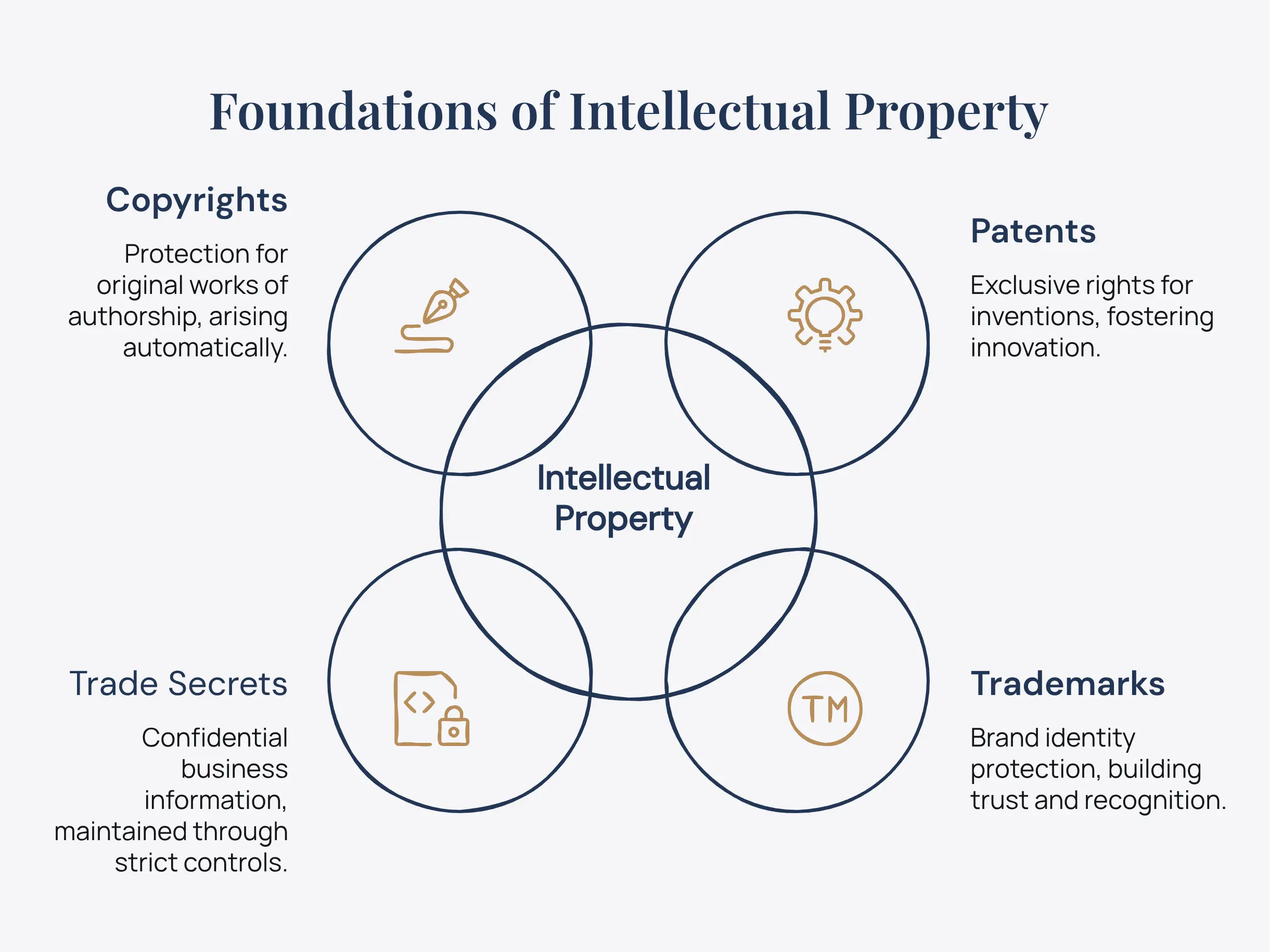
- Patents grant inventors exclusive rights over their inventions, typically for a period of 20 years.
They prevent unauthorized use, manufacturing, or commercialization of patented technologies and are particularly relevant in sectors driven by innovation, including fintech and AI. - Trademarks protect brand identity, including names, logos, and distinctive signs.
They enable businesses to build recognition, trust, and market positioning. In competitive and fast-moving markets such as the UAE, trademark protection is often the first step in securing long-term commercial value. - Trade Secrets cover confidential business information such as algorithms, proprietary processes, customer data, and internal methodologies. Unlike patents, their protection depends on maintaining confidentiality through robust contractual and operational controls.
- Copyrights protect original works of authorship, including written, artistic, and digital content.
Protection arises automatically upon creation, although formal registration strengthens your ability to act in cases of infringement.
From Legal Protection to Business Asset
Intellectual property is no longer a purely defensive mechanism. It has become a core commercial asset, directly influencing business valuation, investment readiness, and scalability.
In the digital environment, this shift introduces complex new challenges: unauthorized digital reproduction and distribution, online trademark infringement across platforms, the emergence of new digital asset classes, blockchain-based ownership structures, and the integration of artificial intelligence into content creation and innovation.
A key principle runs through all of these developments: balancing the rights of creators with broader societal access to knowledge, technology, and innovation.
International and Regional Legal Frameworks

For fintech and technology companies expanding into markets such as the UAE and Egypt, Intellectual Property Law UAE is no longer a standalone legal consideration. It requires alignment across international, regional, and local frameworks simultaneously.
Most companies entering MENA markets already operate under established regimes in Europe or the United States. However, these frameworks do not automatically translate into local compliance or regulatory approval.
Global IP Foundations
The international IP system is built on foundational treaties, including the Paris Convention for the Protection of Industrial Property, the Berne Convention for the Protection of Literary and Artistic Works, and the TRIPS Agreement (Trade-Related Aspects of Intellectual Property Rights). The World Trade Organization has played a significant role in integrating IP protection into global trade systems, establishing minimum standards across jurisdictions.
Within the MENA Region
IP frameworks in the region continue to evolve. The Gulf Cooperation Council (GCC) Patent Office provides a regional route for patents, while trademark registration remains primarily national across Gulf member states. The League of Arab States has supported broader legislative harmonization initiatives.
In the UAE, intellectual property protection is supported by modern legislation and increasingly robust enforcement mechanisms. Our IP legal services in the UAE cover the full lifecycle — from registration and ownership structuring to dispute readiness. Egypt offers strong legal foundations but benefits from a structured and proactive approach to registration from the outset of market entry.
Fashion Law and Intellectual Property in a Digital Market
In the fashion industry, intellectual property is not ancillary — it is central. A fashion brand's value lies in its identity, designs, digital presence, and commercial positioning. In a digital-first environment, these assets are exposed immediately upon launch. Designs can be replicated quickly, content is redistributed globally, and supply chains operate across multiple jurisdictions simultaneously.
Many fashion businesses continue to treat IP narrowly, focusing primarily on trademark protection. Effective protection in today's environment requires a broader approach, covering design rights, digital assets, supplier and manufacturing agreements, and cross-border considerations. This is particularly relevant in markets such as the UAE and Egypt, where expansion opportunities are significant but require clear legal structuring from the outset.
Future Outlook: IP, Innovation, and Regulation
The fashion and technology industries are entering a new phase — one where intellectual property is no longer just about protection, but also about control, monetization, and scalability.
Many brands have expanded into the UAE market, but several key shifts are already shaping how IP will be managed in the coming years. Digital clothing, virtual goods, and blockchain-based assets have become mainstream. What many firms lack is not awareness, but operational control. IP protection is no longer purely legal — it is operational.
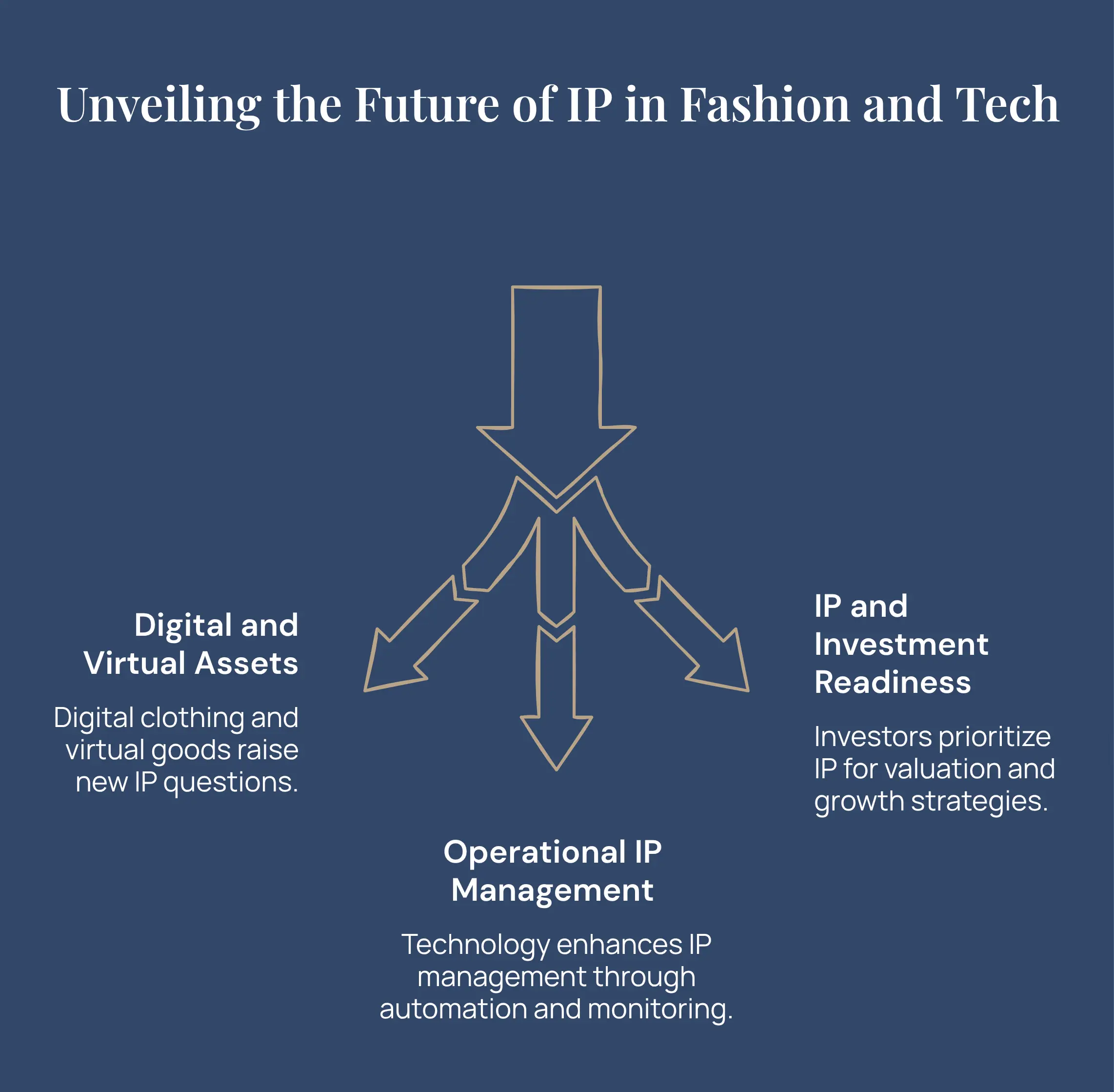
1. Digital and Virtual Assets
Fashion, art, and technology are increasingly intersecting through digital clothing, virtual goods, and blockchain-based assets. These developments raise new legal questions around ownership, licensing, and cross-border applicability. Brands that establish clear IP frameworks for digital products early will be better positioned as this market matures.
2. Operational IP Management
IP protection is also increasingly operational. Technology now enables faster detection of infringement, platform-based responses, and automated monitoring systems — making proactive IP management both more accessible and more necessary than before.
3. IP and Investment Readiness
Investors are placing greater emphasis on clear ownership structures, enforceable rights, and scalability across jurisdictions. IP portfolios are now directly linked to valuation and deal structuring, making sound IP management an essential component of any growth-stage business.
Conclusion
On World Intellectual Property Day, the importance of IP extends beyond legal protection. It has become an economic, operational, and developmental necessity.
In a world shaped by digital innovation, artificial intelligence, and cross-border markets, intellectual property serves as the bridge between ideas and execution, between innovation and commercialization, between creativity and sustainable growth.
For businesses operating in or entering markets such as the UAE and Egypt, the ability to structure, protect, and build on your IP effectively is no longer optional.
Al Adly & Co.: Intellectual Property & Technology Practice

We advise businesses, creators, and technology companies across the full spectrum of Intellectual Property Law UAE, including:
- Trademark registration and brand protection
- Patent strategy and filings
- Trade secret structuring and protection
- NFT and digital asset legal frameworks
- AI governance and emerging technology regulation
- IP enforcement before UAE Courts and DIFC Courts
Ready to protect what you have built?
Contact us today for a strategic consultation and let us help you turn your IP into a lasting competitive advantage.

Neethi Zenith
Senior Legal Consultant
Neethi Zenith is a Legal Consultant at Al Adly & Co, where she advises founders, executives, and investors on corporate structuring, regulatory compliance, and cross-border legal strategy across the UAE and Egypt.
Her work focuses on turning complex legal requirements into clear, executable strategies, helping businesses enter, operate, and scale in high-growth markets with confidence.