


By: Ahmed Adly, Founder of Al Adly & Co.
Key Takeaways
- On 10 June 2026, the FTA released an updated version of its corporate tax guide on the taxation of family foundations, Effective Immediately upon issuance.
- The update does not change the underlying legislation. It resolves significant points of ambiguity that practitioners have faced since the original guide was issued and particularly around multi -tier structures, asset transfers, and family office treatment.
- A juridical Persons can now be confirmed as eligible for fiscal transparency even where it is jointly owned by more than one qualifying family Foundation. Collective ownership does not break the transparency chain.
- Single Family offices and multi-Family offices cannot Qualify for fiscal transparency under Article 17. They remain taxable persons. A free zone SFO may access the 0% rate only on income from active subject to oversight by a competent authority.
- Transfers of personal investments and personal real estate by natural persons to a family foundation are generally outside the scope of UAE corporate Tax. Transfers by related juridical Parsons must be on arm’s length terms and arm give rise to a taxable gain or loss.
Background: The UAE Corporate Tax Framework for Family Foundations

The UAE corporate tax regime, which came into effect on 1 June 2023, introduced a new set of rules for the taxation of private wealth structures including family foundations, trusts, and similar entities. The framework reflects the UAE’s longstanding position as a leading jurisdiction for family wealth planning and structuring and is designed to enable legitimate wealth holding structures to operate efficiently without triggering corporate tax on passive family investment activities.
A family Foundations that constitutes a juridical person such as a foundation established under the DIFC Law No.3 of 2018, ADGM regulations, or RAK iCC frameworks and by default, subject to UAE Corporate Tax as a separate taxable person. However, it may apply to the FTA to be treated as fiscally transparent, akin to an unincorporated partnership. Where this election is approved, the foundation itself is not subject to corporate tax, instead, its income, expenditure, assets, and liabilities are treatment election is that well-structured family foundations holding passive assets operate outside the corporate Tax net. This makes article 17 conditions, and the FTA guidance on how to satisfy them, critically important for any family using a foundation structure in the UAE.
THE ARTICLE 17(1) CONDITIONS: THE GATEWAY TO FISCAL TRANSPARENCY
To qualify to apply for fiscally transparent treatment, a family foundation must satisfy five cumulative conditions under Article 17(1) of the UAE corporate Tax Law. These are set out in the table below.
Condition (Article 17 (1) | What It Requires |
|---|---|
Beneficiary Condition | The foundation must be established for the benefit of identified natural persons, a public benefit entity, both. Beneficiaries do no need to be members of the same family. A wholly owned corporate subsidiary satisfies this condition by reference to the foundation’s broader beneficiary structure. |
Principal activity Condition | The foundation’s principal activity must be the holding or investment of assets on behalf of its beneficiaries and not the conduct of the active business operations. |
No business activity Condition | The foundation must not conduct a business or business activity. This is the condition that typically prevents single family offices and multifamily offices from qualifying for transparent treatment. |
Non Tax avoidance condition | The main purpose of the foundation must not be the avoidance of corporate tax structures that exists primarily to avoid tax rather than achieve genuine family wealth planning objectives will not qualify. |
Distribution condition (where applicable) | Where a public benefit entity is a beneficiary, the foundation must distribute the relevant proportion of its income to that entity within the prescribed period and generally within six months of the end of the relevant tax period |
All five conditions must be satisfied on ongoing basis. Loss of any condition during a Tax period may result in the loss of transparent treatment for that period and with potentially significant corporate tax consequences. The annual confirmation filling required by judicial persons treated as unincorporated partnerships is the mechanism through which ongoing compliance is demonstrated to the FTA.
THE JUNE 2026 UPDATE: WHAT CHANGED AND WHAT IT MEANS
The June 2026 update to CTGFF1 introduces clarifications across four principal areas: transfers to Family Foundations, multi-tier and multi-Foundation ownership structures, family office treatment, and the status of LLCs and foreign partnerships. The following table summarises each area of clarification and its practical implication.
Area of Clarification | What the June 2026 Update Confirms | Practical Implication |
|---|---|---|
Transfers to a Family Foundation | Transfers from natural persons of personal investments and real estate are generally outside the scope of UAE Corporate Tax. Transfers from related Juridical Persons must be on arm's length terms and may give rise to a taxable gain or loss | Founders transferring personal assets to a Foundation should confirm asset classification before transfer. Intra-group transfers from corporate entities require arm's length analysis. |
Multi-Foundation ownership of SPVs | A Juridical Person can be jointly owned by more than one Family Foundation and still satisfy the ownership condition for fiscal transparency. Collective ownership by multiple Foundations does not break the transparency chain. | Families operating through multiple Foundation branches can share holding companies or SPVs without losing transparent status, provided each Foundation itself qualifies. |
Beneficiary condition underlying subsidiaries | A wholly owned corporate subsidiary of a qualifying Foundation is treated as satisfying the beneficiary condition by reference to the Foundation's broader beneficiary structure. | Underlying holding companies and SPVs do not need to independently satisfy the beneficiary condition, this flows from the qualifying parent Foundation. |
Changes in tax classification | A transition between fiscally transparent and opaque treatment (due to ownership changes) does not trigger a deemed disposal or revaluation of the entity's underlying assets. | Restructurings that change a subsidiary's classification status do not create an unexpected tax cost at the asset level. |
Pre-existing holding vehicles | An entity does not need to have been wholly owned by a Family Foundation from inception. A pre-existing vehicle may be acquired by the Foundation and thereafter benefit from transparent treatment if conditions are met. | Existing SPVs, LLCs, or holding companies can be brought into a transparent Foundation structure without requiring a fresh start. |
Single and Multi-Family Offices | SFOs and MFOs are unlikely to satisfy the 'no business activity' condition (Article 17(1)(c)) and therefore cannot qualify for transparent treatment. A Free Zone SFO may access the 0% rate only on Qualifying Income subject to regulatory oversight by a Competent Authority. | Family offices must be treated as separate Taxable Persons. Free Zone SFO structures should be reviewed against regulatory oversight requirements to assess whether the 0% rate is available. |
LLCs as 'similar entities' | An LLC is not, in itself, a 'similar entity' to a foundation or trust and cannot independently apply to the FTA for transparent treatment. However, an LLC wholly owned by a qualifying Foundation may benefit from transparency if other conditions are met. | Standalone LLCs cannot self-apply for transparent treatment. The transparency benefit must flow from a qualifying Family Foundation in the ownership chain. |
Foreign partnerships and trusts | A foreign partnership or trust that qualifies as an Unincorporated Partnership is not required to register for UAE Corporate Tax though whether registration is advisable depends on the specific facts. | Foreign structures qualifying as transparent are not automatically required to register, but each structure should be assessed individually. |
Transfers To a Family Foundation: The New Guidance in Detail

Transfers by Natural Persons
The most common scenario for UAE families is a founder or family member transferring personal investment assets listed securities, private company shares, real estate into a Family Foundation as part of an estate or wealth structuring exercise. The June 2026 guidance confirms that where such assets constitute personal investments or personal real estate investments in the hands of the natural person transferor, the transfer is generally not subject to UAE Corporate Tax.
This is an important and welcome confirmation. It aligns with the broader policy intent of the Family Foundation regime: to facilitate the movement of family wealth into holding structures without triggering tax at the point of transfer. The key question for advisors is always whether the assets in question qualify as personal investment assets in the hands of the transferor particularly where the individual has historically been actively involved in managing those assets.
Transfer by related Juridical Persons
Where the transferor is a judicial person for example, A UAE company or holding entity that is a related party to the foundation and the position is more complex. The June 2026 guidance confirms that such transactions must be conducted on Arm’s length terms, consistent with the transfer pricing requirements applicable to related party transactions under the UAE corporate Tax Law. Depending on the specific facts and the nature of the assets, the considerations paid, and the relationship between the parties and the transfer may give rise to taxable gain or loss for corporate tax purposes.
This means that corporate to foundation transfers require careful pre transaction analysis. The arm length principles apply, and advisors should no ensure that transfers documentation reflects appropriate valuations and that the corporate tax implications at the transferor entity level are properly assessed before any restructuring is undertaken.
Multi-Tier and Multi-Foundation Structures: The Key Clarifications
Joint Ownership of SPVs by Multiple Family Foundations
One of the most practically significant clarifications in the June 2026 update concerns multi-Foundation ownership of holding entities. Updated Example 9 in CTGFF1 now confirms that a Juridical Person can be wholly owned and controlled collectively by more than one Family Foundation, each itself treated as an Unincorporated Partnership and still satisfy the ownership condition for fiscal transparency under Article 17.
This matters considerably for large or multi-generational family groups where different family branches have established separate foundations perhaps representing different generations or different family lines, but wish to consolidate investments through a single shared holding company or SPV. Under the previous guidance, there was ambiguity about whether collective ownership by multiple Foundations broke the transparency chain. The June 2026 update removes that ambiguity: it does not.
The Uninterrupted Transparency Chain
The FTA reiterates consistently with previous guidance that fiscal transparency in multi-tier structures requires an uninterrupted chain of entities that are themselves treated as fiscally transparent. The presence of a non-transparent entity anywhere in the ownership chain will break that chain, preventing transparency from flowing through to the entities below it.
This means that every entity in the ownership structure from the Family Foundation at the top through each intermediate holding company or SPV must independently qualify for and maintain transparent treatment. A single entity in the chain that fails the Article 17 conditions, or that has not obtained FTA approval where required, will block transparency for all entities below it. Ongoing monitoring of the entire ownership chain is therefore essential, not just the Foundation itself.
Family Offices: The FTA's Confirmed Position
Single Family Offices and Multi-Family Offices Cannot Qualify for Transparency
The June 2026 guidance addresses directly one of the most frequently raised questions in UAE private wealth practice: the tax treatment of the family office entity itself. The FTA confirms that, given the nature of their activities, Single Family Offices (SFOs) and Multi-Family Offices (MFOs) are unlikely to satisfy the 'no business activity' condition under Article 17(1)(c) of the CT Law. Active management, advisory, and service functions constitute a Business or Business Activity, and the presence of such activities prevents the family office entity from qualifying for fiscally transparent treatment.
The practical consequence is that family office entities must be treated as separate Taxable Persons, subject to Corporate Tax on their income at the standard rate (or the 0% small business relief rate, if applicable). The family wealth-holding Foundation and the family office operating entity must be structured and maintained as genuinely separate legal and operational structures. Conflation of the two or arrangements where the Foundation purports to conduct family office functions risks loss of the Foundation's transparent status.
Free Zone SFOs: The 0% Rate Is Not Automatic
A Single-Family Office established as a Free Zone Person for example, in the DIFC, ADGM, or another UAE free zone may, in principle, access the 0% Corporate Tax rate on Qualifying Income from Qualifying Activities. However, the June 2026 guidance makes clear that this is not automatic, and that the conditions are more restrictive than they may initially appear.
For a Free Zone SFO to access the 0% rate on investment management or wealth management services, those services must be subject to regulatory oversight by a Competent Authority specifically the Central Bank of the UAE, the Dubai Financial Services Authority, the Financial Services Regulatory Authority, or the Securities and Commodities Authority. An SFO managing assets exclusively for a single family generally falls outside the regulatory perimeter of these authorities and therefore cannot access the 0% rate in respect of those activities.
The guidance notes that extending services to third-party clients could, in principle, bring the SFO's activities within the required regulatory framework. However, doing so would effectively convert the SFO into a Multi-Family Office and would likely require the entity to obtain a fund management or investment advisory licence from the relevant authority. This is a significant structural and regulatory step that requires careful planning before implementation.
LLCs, Foreign Structures, And the Limits of Transparent Treatment
LLCs Cannot Self-Apply for Transparent Treatment
The updated guidance provides an important clarification on the position of limited liability companies within Family Foundation structures. An LLC including a UAE mainland LLC or a free zone LLC is not, in itself, a 'similar entity' to a foundation or trust within the meaning of Article 17 of the CT Law. This means an LLC cannot independently apply to the FTA for fiscally transparent treatment as an Unincorporated Partnership.
However, an LLC that is wholly owned by a qualifying Family Foundation may still benefit from transparent treatment but only where it is wholly owned by the qualifying Foundation and independently satisfies the other Article 17(1) conditions. The transparency flows from the qualifying Foundation parent to the LLC subsidiary, not from the LLC itself. Structures where an LLC sits above a Family Foundation, or where an LLC seeks transparency independently, will not qualify.
Foreign Foundations and Partnerships
The updated guide also addresses the position of foreign structures. A foreign partnership or trust that would otherwise qualify as an Unincorporated Partnership for UAE Corporate Tax purposes including a foreign trust meeting the Article 17(1) conditions is not automatically required to register for UAE Corporate Tax. The FTA confirms this is not a mandatory requirement. However, whether registration is advisable will depend on the specific facts of the structure and should be assessed on a case-by-case basis with appropriate advice.
For families with cross-border structures particularly those using common law trusts established in the Cayman Islands, BVI, Jersey, or other international centres alongside UAE-based Foundation structures this clarification is relevant. The interaction between the UAE Corporate Tax treatment of the foreign trust and its UAE-based underlying entities will depend on the specific ownership and activity profile of each structure.
Al Adly & Co. Perspective
The June 2026 update to CTGFF1 is a positive development for the UAE private wealth market. It resolves practical ambiguities that have created uncertainty for advisors and families since the Corporate Tax regime was introduced, and it provides greater operational clarity for the structures that are most commonly used in UAE family wealth planning multi-Foundation holding arrangements, pre-existing SPVs brought into Foundation structures, and family office entities operating alongside wealth-holding foundations.
The clarifications on multi-Foundation ownership are particularly significant. Many large UAE family groups including those with generational or branch-specific foundation structures have structured their wealth around multiple foundations for governance, succession, and asset-separation reasons. The confirmation that an SPV jointly owned by multiple qualifying Foundations retains its transparent status removes a structural risk that has caused uncertainty and, in some cases, driven unnecessary restructuring.
At the same time, the update reinforces the importance of ongoing structural maintenance. Transparency is not a status that, once obtained, can be assumed to continue without review. The conditions under Article 17(1) must be satisfied on a continuous basis. Ownership changes, new activities, and changes to family office arrangements can all affect compliance. The annual confirmation filing is not a formality it is the mechanism by which families and their advisors certify to the FTA that the structure remains within the framework.
For families who have not yet reviewed their structures against the updated guidance, now is the right moment to do so. The FTA's continuing refinement of this area signals both the growing sophistication of the UAE's private wealth regulatory framework and the Authority's expectations that structures will evolve in line with updated guidance.
Frequently Asked Questions
Yes. The term “family Foundation” is broader than its name suggests. A foundation can be established for the benefit of identified or identifiable natural persons who need not be members of the same family, as well as public benefit entities.
Yes. This is one of the key clarifications in the June 2026 update. Collective ownership by more than on qualifying foundations does not break the transparency chain, provided each foundation itself qualities for transparent treatment.
No. A preexisting vehicle can be acquired by a family foundation and thereafter benefit from the transparent treatment provided the relevant conditions are met at the time of and following the acquisition.
Generally, no. SFOs and MFOs conduct active management and service activities and are therefore unlikely to satisfy the “no business activity” Condition. They must be treated as separate taxable persons.
Potentially, but only on qualifying income from qualifying activities that subject to regulatory oversight by a competent authority (CBUAE, DFSA, FSRA, or SCA). Most SFOs managing assets for a single, family, fall outside this regulatory perimeter and therefore would not qualify for the 0% rate.
No. the June 2026 guidance confirms that a transition between transparent and opaque treatment does not trigger a deemed disposal or revaluation of the entity’s underlying assets for corporate Tax Purposes.
Not necessarily. A foreign partnership or trust that qualifies as an unincorporated partnership is not automatically required to register. Whether registration is advisable will depend on the specific facts and should be assessed on a case-by-case basis.
Disclaimer: This article is prepared by Al Adly & Co. for general informational and client advisory purposes only. It does not constitute legal advice and does not create a lawyer-client relationship. Information is based on the UAE Cabinet resolution announced by WAM on 18 June 2026. The regulatory position may be supplemented by implementing regulations, ministerial guidance, or platform-specific directives. For advice specific to your platform, business, or circumstances, please contact our team directly. © 2026 Al Adly & Co. Law Firm. All rights reserved. | www.aladly.co
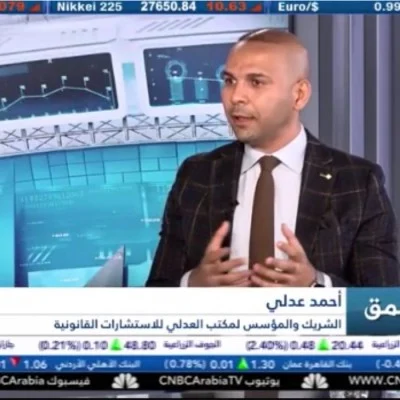
Ahmed Adly
Founder & Managing Partner
Ahmed Adly is the founder and managing partner of Al Adly & Co, advising international businesses and entrepreneurs operating in the UAE and Egypt. With more than 20 years of legal experience and a background in senior government legal roles, he helps clients navigate regulatory complexity, structure transactions, and resolve high-value disputes.