


By: Ahmed Adly, Founder of Al Adly & Co.
Key Takeaways
- The UAE’s Insolvency framework, governed Federal Decree Law No.51 of 2023 (in force 1 May 2024), provides three formal pathways for financially distressed businesses: Preventive Settlement, financial restructuring, and bankruptcy. Liquidation is the last resort not the default.
- A declaration of financial Emergency (EFC) issued by cabinet resolution on the proposal of the minister of finance and activates a separate protective framework under Article 251- 258 of the bankruptcy Lae, suspending filing obligations and granting courts wide discretionary powers.
- During an EFC, companies are not required to file for bankruptcy even if they have ceased paying debts for 30 + business days. Directors who pay employee salaries from company assets during an EFC are protected from company assets during an EFC are protected from civil and criminal liability for insolvent trading.
- Preventive settlement available before cessation of payment exceeds 60 consecutive calendar days and is most powerful early-stage tool. Only the debtor can initiate it. The debtor remains in control. A three-month moratorium on creditor enforcement applies immediately on commencement.
- Financial Restructuring is available to both debtors and creditors after cessation of payment. The Bankruptcy court can confirm a restructuring plan even against a dissenting creditor class (cram-down), a feature absent from preventive settlement.
- Employees are preferential creditors in UAE insolvency. Unpaid salaries for up to four months, end of service gratuity, notice pay, and accrued leave rank ahead of unsecured creditors in the distribution waterfall.
- The DIFC and ADGM operate entirely separate insolvency regimes. Federal Decree law No.51 of 2023 does not apply to companies incorporated in these free zones.
CASH FLOW PRESSURE DOESN'T AUTOMATICALLY MEAN BANKRUPTCY

Many directors assume that once a company struggles to pay its debts, liquidation is inevitable. Under the UAE's current insolvency framework, that's no longer the case.
Federal Decree-Law No. 51 of 2023 introduced a rescue-oriented system that gives viable businesses several opportunities to restructure, negotiate with creditors, and continue operating before liquidation becomes necessary. In certain circumstances, a government-declared Financial Emergency can also temporarily suspend directors' filing obligations and provide additional legal protections.
This guide explains the options available, when each applies, and what directors, investors, and creditors should know before financial pressure turns into a legal crisis.
WHAT IS A DECLARATION OF FINANCIAL EMERGENCY?
Definition Under UAE Law
The emergency financial crisis is defined in Federal Decree Law No.51 of 2023 as:
“An incident that befalls the debtor, resulting in a disturbance in its financial situation and its inability to pay off its debts or its cessation of payment as result of general situation that affects trade or investment in the state, such as an outbreak of an epidemic, a natural or environmental disaster, a war or otherwise.”
The definition is intentionally broad. An epidemic, a natural disaster, a war, or any other systemic event affecting trade or investment across the UAE can qualify. Critically, the declaration is not automatic. A Cabinet Resolution, issued on the proposal of the Minister of Finance, is required to formally activate the EFC and specify its duration. The Cabinet also has the power to extend any timeframes set out in the Bankruptcy Law for the duration of the crisis.
THE THREE PATHWAYS UNDER UAE BANKRUPTCY LAW
Federal Decree-Law No. 51 of 2023 provides three formal procedures for addressing business financial distress. They are designed to operate sequentially from early-stage intervention through to liquidation with each successive pathway reserved for more serious states of financial difficulty. The following table sets out the key features of each.Features | Preventive Settlement | Financial Restructuring | Bankruptcy / Liquidation |
|---|---|---|---|
Who can apply | Debtor only | Debtor or creditors | Debtor, creditors, or supervisory authority |
Trigger | Liquidity stress of debts not yet ceased for 60+ days | Cessation of payment (30+ days); over indebtedness | Insolvency, cessation of payment; failure of restructuring |
Objective | Negotiate and settle debts early, before insolvency | Restructure debt and operations; business survival | Orderly winddown; asset liquidation; creditor distribution |
Debtor control | Debtor remains in possession; no court-appointed trustee initially | Debtor remains in control under court supervision | Trustee appointed; management loses control |
Moratorium | 3 months (extendable to 6 months maximum) | Determined by court; longer than preventive settlement | No moratorium enforcement resumes post-liquidation order |
Court involvement | Bankruptcy Court supervises; lower intensity than restructuring | Bankruptcy Court + court-appointed expert/trustee | Bankruptcy Court directs all proceedings |
Plan approval | Creditor vote required; secured creditors vote only if rights altered | Class-based creditor vote; court can 'cram down' dissenting class | No plan distribution per statutory waterfall |
Outcome | Agreed settlement with creditors; business continues | Restructured business continues under approved plan | Entity dissolved; assets distributed to creditors by priority |
Available under EFC? | Yes, with extended timeframes and modified procedures | Yes, with extended timeframes and modified procedures | Debtor control |
THE PREVENTIVE SETTLEMENT: THE UAE’S EARLY RESCUE MECHANISM
The preventive settlement is the most significant new tool introduced by federal Decree Law No.51 of 2023. It is available to a debtor that is experiencing liquidity stress but has not yet ceased paying its debts for more than 600 consecutive calendar days. Only the debtor can apply, and creditors cannot force a company into preventive settlement.
Once proceedings commence, a three-month moratorium on all creditor enforcement actions takes effect immediately. The moratorium can be extended by one month at a time, up to a maximum of six months. During this period, the debtor remains in possession of its business and assets, negotiating terms with creditors under Bankruptcy Court supervision. The debtor may propose terms including payment deferrals, maturity extensions, debt to equity conversions, and haircuts on principal tools like those available in European restructuring frameworks.
Secured creditors cannot vote on the preventive settlement proposal unless the proposal expressly alters their rights. All other creditors vote, and approval requires the requisite majority. Unlike the restructuring pathway, the Bankruptcy Court cannot confirm a preventive settlement plan over a dissenting creditor majority which means genuine creditor engagement is essential from the outset.
THE EMERGENCY FINANCIAL CRISIS FRAMEWORK: PROTECTIONS IN DETAIL

When a Declaration of Financial Emergency is issued, Articles 251 to 258 of the Bankruptcy Law activate a set of specific protections and procedural modifications. These are summarised in the table below.
Protection / Measure | What It Does | Who Benefits |
|---|---|---|
Suspension of mandatory bankruptcy filing obligation | A debtor that has ceased paying debts for 30+ consecutive business days due to the EFC is not required to file for bankruptcy proceedings. The obligation is deferred for the duration of the declared crisis. | All debtors’ companies and natural persons acting as traders whose payment difficulties are caused by the declared emergency |
Postponement of creditor-initiated proceedings | The Bankruptcy Court may postpone consideration of any creditor application to initiate proceedings during the EFC period, giving the debtor time to stabilise without court-mandated restructuring. | Debtors facing creditor enforcement pressure at the time of the EFC declaration |
Extension of prescribed timeframes | All deadlines, moratorium periods, and procedural time limits set out in the Bankruptcy Law may be doubled or otherwise extended by Cabinet Resolution for the duration of the EFC. | Debtors and trustees managing ongoing proceedings during the crisis period |
Director and manager protection employee salary payments | Directors and managers may dispose of company assets to pay unpaid employee wages and salaries without incurring civil or criminal liability for preferential or insolvent trading. Allowances, bonuses, and non-cash benefits are excluded. | Company directors, general managers, and CFOs of distressed companies needing to pay essential staff |
Court discretion to proceed without trustee | Where a debtor voluntarily files for bankruptcy during an EFC, the court may accept the application and elect not to appoint a trustee, allowing the debtor to remain in control of its operations during proceedings. | Debtors who choose to file voluntarily during the crisis and can demonstrate that financial difficulties arose from the EFC |
The Director Protection Provision: Why It Matters
One of the most practically significant provisions of the EFC framework is the protection it extends to directors and managers of corporate debtors. Under normal UAE law, directors and managers who dispose of a company’s assets while the company is insolvent may face civil liability for preferential or insolvent trading. This creates a genuine conflict for management in distressed companies: pay the employees to keep the business running and face personal liability or withhold payment and risk losing the workforce.
The EFC framework resolves this conflict expressly. During a declared Emergency Financial Crisis, directors and managers may pay unpaid wages and salaries from company assets without incurring civil or criminal liability provided they act prudently and in good faith in the best interests of the debtor. The protection covers base wages and salaries only. Allowances, bonuses, pay raises, and other contingent payments are excluded.
This provision reflects a deliberate policy choice by UAE lawmakers: during a declared crisis, keeping employees paid and the business operational is a higher priority than strict adherence to insolvency era preference rules. For directors of distressed companies operating during a future EFC, this is a critical protection that fundamentally changes the risk calculation around employee payment decisions.
DIRECTOR OBLIGATIONS AND PERSONAL LIABILITY IN FINANCIAL DISTRESS
The Mandatory Filing Obligation
Outside a declared Emergency Financial Crisis, directors and managers of UAE companies face a mandatory obligation to file for restructuring or bankruptcy proceedings within 30 consecutive business days of cessation of payment, or upon the onset of over-indebtedness. This obligation is one of the most significant and least understood governance requirements facing UAE company management.
Failure to file within the prescribed period does not automatically invalidate an eventual application, but it does expose directors and managers to personal civil and criminal liability. UAE courts have the power to hold directors personally liable for company debts incurred after the point at which they knew or ought to have known of the company’s insolvency, where the directors failed to take the steps required by law.
Personal Liability for Directors During Insolvency
The Bankruptcy Law extends director liability beyond the mandatory filing obligation. Directors and managers may be held personally liable for company debts where they engaged in conduct that contributed to the company’s financial difficulties including dissipating assets, incurring new debts without reasonable prospect of repayment, maintaining trading while knowingly insolvent, or failing to maintain adequate accounting records.
The practical consequence is that directors of distressed UAE companies should seek legal advice at the earliest signs of financial difficulty not when formal insolvency proceedings become inevitable. Early engagement allows directors to understand their obligations, document their decision-making, and consider all available pathways before the mandatory filing window closes.
PRACTICAL DECISION-MAKING: WHICH PATHWAY, AND WHEN
For a business facing financial difficulties in the UAE, the choice of pathway depends on the severity and cause of the distress, the timeline of debt obligations, and the relationship with key creditors. The following framework guides the decision.
- If your business is experiencing liquidity stress but has not yet stopped paying debts for two months, Preventive Settlement is available. This is the most flexible and debtor-friendly pathway. Use it. Act before cessation of payment exceeds 60 days.
- Preventive Settlement requires genuine creditor support. A process that begins with hostile creditors rarely achieves the required majority. Early, informal engagement with major creditors before filing materially improves the prospects of a successful settlement. Engage creditors early.
- Where financial difficulties are caused by a systemic external event regional conflict, natural disaster, economic shock monitor whether a Cabinet Declaration of Financial Emergency is issued. If so, the mandatory filing obligation is suspended, and the full EFC protective framework applies. Assess the cause of distress.
- The legal consequences of delayed filing including director personal liability accrue from the point of cessation of payment, not from the point of court filing. Uncertainty about outcome is not a reason to defer legal advice. Do not wait for certainty.
- If you are a creditor of a distressed UAE company, understanding your priority position, the availability of security, and the applicable procedure for initiating proceedings gives you maximum optionality. Waiting until bankruptcy is declared typically produces the worst outcome. Creditors: assess your position early.
AL ADLY & CO. PRESPECTIVE
The UAE’s insolvency framework has undergone a fundamental transformation. Federal Decree Law No. 51 of 2023 is not marginal update to the 2016 Law and it is a structurally different instrument, built around the principle that viable business should be rescued, not liquidated, and that tools for doing so should be available early, before the situation becomes irretrievable.
The declaration of financial Emergency mechanism is a particularly significant feature. It reflects the UAE’s recognition that systemic economic shocks and pandemics, regional conflicts, environmental disasters and it requires a different legal response than individual corporate failure. A company that cannot pay its debts because its entire sector has been shut down by an external event is in fundamentally different position from a company that is insolvent due to management failure. The EFC framework treats those situations differently, and correctly so.
What this means in practice is that UAE businesses and their advisors need to understand the full spectrum of tools available not just the binary of ‘continue trading’ or ‘go bankrupt.’ The Preventive Settlement is available and powerful. The Financial Restructuring pathway has cram down capability. The Emergency Financial Crisis framework suspends filing obligations and protects directors. New financing can be obtained during proceedings. These are sophisticated mechanisms that, used correctly, change outcomes.
If your business is experiencing financial pressure, early legal advice often creates more options than waiting until insolvency becomes unavoidable. We advise directors, investors, lenders, and businesses across the UAE on preventive settlement, restructuring, director liability, and creditor strategy before problems escalate.
Frequently Asked Questions
No. Federal Decree-Law No. 51 of 2023 applies to onshore UAE companies and natural persons acting as traders. Companies in the DIFC and ADGM are governed by those free zones' own standalone insolvency legislation and courts, which are separate and distinct from the federal framework.
Yes. The preventive Settlement procedure, available before cessation of payment exceeds 60 days, is specifically designed to allow viable businesses to negotiate with creditors and resolve financial difficulties without entering formal bankruptcy. The financial Restructuring pathways similarly allows business survival through a court approved plan.
Employees are treated as preferential creditors. Unpaid salaries for up to four months, end-of-service gratuity, notice pay, and accrued leave are given priority over unsecured creditors. In DIFC, Schedule 8 gives additional priority to salary, holiday pay, and pension contributions owed in the three months before insolvency.
Insolvency is a financial state the inability to pay debts as they fall due. Bankruptcy is the legal procedure initiated once insolvency is established. The UAE framework now provides multiple pathways between the onset of financial distress and formal bankruptcy, specifically designed to resolve difficulties before liquidation becomes the only option.
Disclaimer: This article is prepared by Al Adly & Co. for general informational and client advisory purposes only. It does not constitute legal advice and does not create a lawyer-client relationship. Information is based on the UAE Cabinet resolution announced by WAM on 18 June 2026. The regulatory position may be supplemented by implementing regulations, ministerial guidance, or platform-specific directives. For advice specific to your platform, business, or circumstances, please contact our team directly. © 2026 Al Adly & Co. Law Firm. All rights reserved. | www.aladly.co
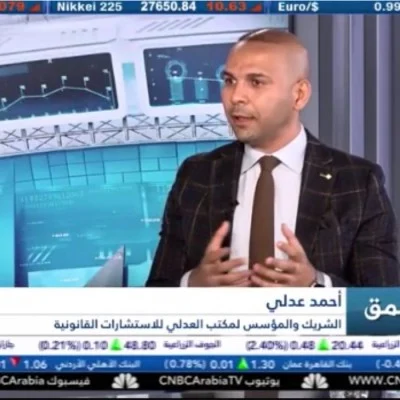
Ahmed Adly
Founder & Managing Partner
Ahmed Adly is the founder and managing partner of Al Adly & Co, advising international businesses and entrepreneurs operating in the UAE and Egypt. With more than 20 years of legal experience and a background in senior government legal roles, he helps clients navigate regulatory complexity, structure transactions, and resolve high-value disputes.